
Grants come and go—but PBL culture can last. 🎯
School administrators face a challenge that’s all too familiar: a short window of opportunity with grant funding—and the pressure to make it count. The key question isn’t how much money is available, but how wisely you use it. How do you avoid funding fads and instead ignite a Project Based Learning (PBL) culture that thrives long after the grant runs dry?
This blog is your roadmap. It’s for K–12 district leaders who are ready to go beyond programs and build a movement—a culture of engaged learners and empowered educators. We’ll unpack three actionable strategies:
- Shift spending from programs to people.
- Invest in the “three pillars” of sustainable PBL.
- Speak the language of grant funders—with strategy.
🧠 Shift from Programs to People: Build Belief First
Let’s get real: a flashy program or fancy software won’t transform a school. People will.
Too many districts make the mistake of spending grant dollars on short-term “stuff”—tech platforms, pre-packaged lessons, or single-day trainings. The mindset shift you need is this: Use your grant to build belief, not just buy products.
Ryan Steuer, CEO of Magnify Learning, puts it bluntly:
“Programs expire. Culture sustains.”
Start with a cohort of committed teachers. Fund a small group of early adopters and give them what they really need to thrive in PBL: coaching, release time, collaboration opportunities, and visibility. These educators become your internal change agents, spreading enthusiasm and expertise across your district.
Picture this:
A handful of teachers attend high-quality PBL training. They get support from a coach and are given time to plan collaboratively. They pilot strong PBL units and invite colleagues to observe. Soon, others are asking, “How can I try this in my classroom?”
This isn’t theory. It’s the spark of systemic change. When your teachers believe in the power of PBL, they become its most persuasive advocates.
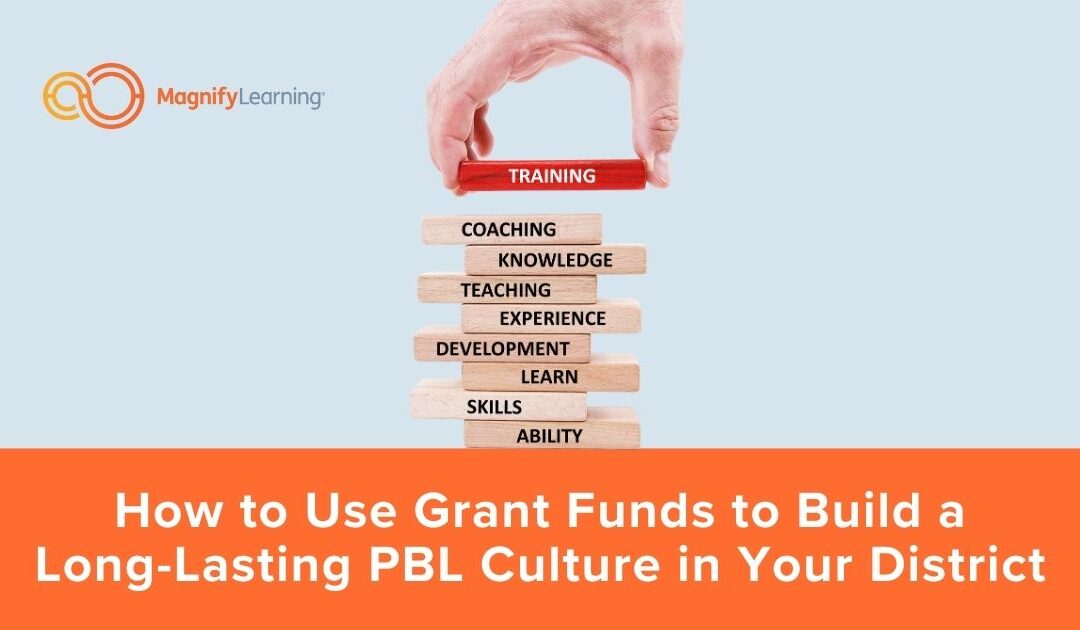
🏗️ The Three Pillars of Grant-Funded PBL Culture
A successful PBL initiative doesn’t just happen. It’s built—deliberately. Use your grant budget to develop these three foundational pillars:
1. People
- Fund coaching, release time, and PLCs.
- Build internal learning teams who drive capacity.
- Grow leadership at every level—from principals to instructional coaches.
Ryan explains:
“Without coaching, implementation success rates drop below 15%.”
Your best bet? Build a leadership pipeline. Invest in those who can support others—from facilitators who model best practices to administrators who align the vision.
2. Professional Development
Training is vital, but not just any PD. Go beyond the basics. Focus on skills over scripts.
Equip your educators to design authentic PBL units, assess deep learning, and create strong community partnerships. Then, coach them through implementation. Workshops ignite ideas; coaching sustains change.
Don’t forget leadership development! Grant dollars should support principals and district leaders in learning how to guide PBL work, create structures, and remove barriers.
3. Promotion
Culture thrives when it’s seen and celebrated.
- Budget for public showcases.
- Host community nights where learners present their work.
- Invest in school branding and communication that tells your PBL story.
“Tell your story. Get buy-in from every stakeholder,” Ryan advises.
When your community sees learners solving real problems, showcasing work with confidence, and lighting up with purpose—momentum builds.
💬 Speak the Language of Funders
Want your grant application to stand out? Align PBL outcomes with funder priorities.
Every grant has goals like equity, workforce readiness, or sustainability. Good news: PBL checks all the boxes.
Here’s how to frame it:
- Equity: PBL gives all learners voice, choice, and meaningful work.
- Workforce readiness: PBL develops collaboration, communication, critical thinking—the top 21st-century skills employers want.
- Sustainability: Your plan includes leadership development and internal systems that ensure lasting impact.
“You want an investment that will build internal systems that sustain PBL long after the funding window ends.”
Make that your thesis statement. It’s not about buying something new—it’s about changing the way your schools teach and learn.
And when it comes to reporting? Go beyond test scores.
Track:
- Student engagement surveys
- Teacher confidence check-ins
- Public product rubrics
- Learner reflections
But don’t stop at data—share the stories.
“Grantors want numbers—but they remember names,” Ryan reminds us.
Tell them about the learner who led a community food drive. The teacher who rediscovered their passion. The family that showed up to a showcase and saw their child in a new light.
🚀 Your Next Steps: From Funding to Flourishing
Let’s bring it all home.
Grant funding is a moment. Use it to build a movement.
- Invest in people. Coaches. Leaders. Teams.
- Build systems. PLCs. PD. Showcases.
- Tell your story. Align outcomes with values—yours and theirs.
This work isn’t about temporary impact. It’s about creating schools where learners are empowered, educators are inspired, and community is connected. That’s the power of a strong PBL culture—and you can build it.
So here’s your challenge: What will your grant really fund? Programs that expire? Or people who inspire?
Magnify Learning has walked this journey with districts across the country. If you’re ready to go from idea to impact, from funding to flourishing—let’s build something that lasts. 💡
👉 Start your transformation at PBLWebinar.com Because the real success of your grant? It’s measured in culture. And culture never expires.
✏️ Reflect and Act
- Who are your early adopters—the educators who can lead this work?
- How will you budget for all three pillars: People, PD, and Promotion?
- What story will your data—and your community—tell about your PBL journey?
Let’s get to work. Your learners are counting on it. 💪
Go to callmagnify.com to schedule a call with the Magnify Learning team.