SHOW NOTES
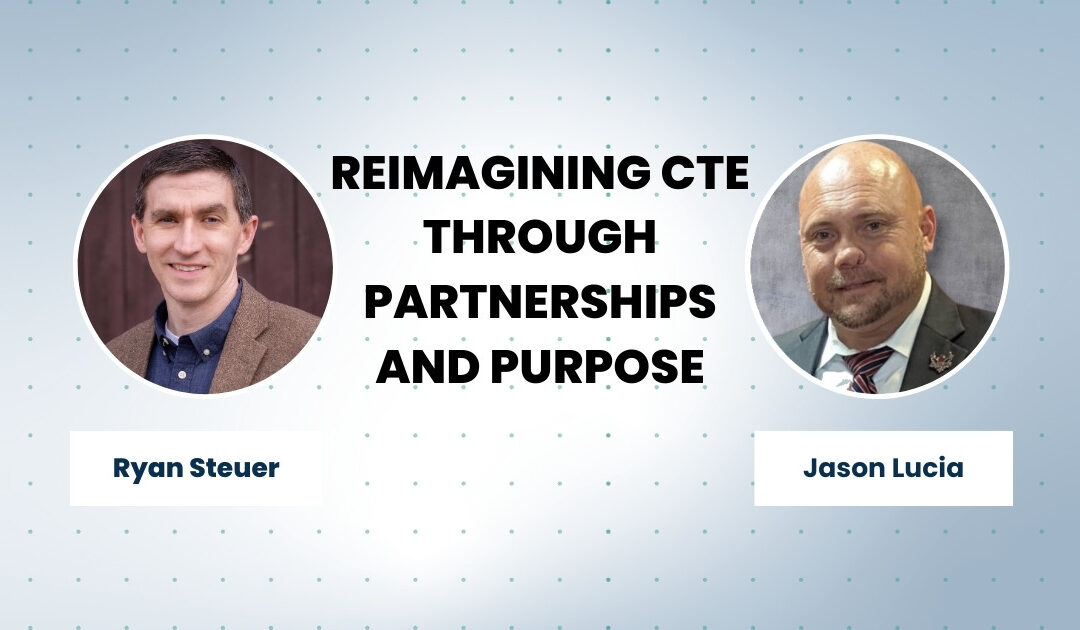
What happens when Career and Technical Education stops operating in silos and starts acting like a true regional partner? In this leadership conversation, Jason Lucia shares how he is redesigning CTE to expand access, strengthen district collaboration, and connect students directly to meaningful, high-wage career pathways. From innovative shared-campus programs to deep industry partnerships, this episode offers a bold vision for what CTE can become when leaders put kids first and challenge the status quo.
Key Takeaways
- CTE as a Place for Reinvention
Jason describes CTE as a space where students can walk through a “magic door”—leaving behind labels, past academic struggles, or fixed expectations—and redefine who they are. CTE provides alternative pathways where hands-on learning, purpose, and relevance drive student success. - Breaking Down District Silos
Rather than pulling students out of their home schools, Jason’s team partners with districts to embed CTE programs directly inside existing buildings. Programs like Aspiring Educators allow students to remain in their schools while gaining CTE credit, aligning standards, and engaging in authentic project-based learning. - Real Workforce Outcomes for Students
Students in Central Westmoreland’s programs are graduating with job offers, paid internships, and industry credentials. Examples include lineman students earning $65,000–$70,000 starting salaries and welders transitioning into paid internships with full benefits before graduation. These outcomes redefine what postsecondary readiness looks like. - Industry Partnerships Built on Trust
Jason explains how industry partners gain access to students by actively participating in the learning process. Through a structured VIP partnership model, businesses engage early, build relationships with students, and experience the program firsthand—creating a true two-way partnership rather than a transactional pipeline. - Leadership That Starts with Stories
Change doesn’t start with policy—it starts with people. Jason emphasizes the importance of collecting and sharing student success stories to build buy-in with superintendents, boards, and community partners. One strong story can open the door to collaboration that scales across an entire region.
Leadership Reflection
- Where are CTE opportunities siloed in your system—and what would it take to open access?
- How might partnerships with districts and industry expand opportunities without adding new buildings or programs?
- What student success stories are you ready to tell to move the conversation forward?
Action Step
Start building a portfolio of student success stories—academic, personal, and career-based. Use those stories to initiate conversations with district leaders, community partners, and industry about what’s possible when you design CTE around students instead of systems.
PBL Readiness Scorecard: Assess your school or district’s readiness for Project Based Learning and receive personalized next steps at pblscore.com
RESOURCES & LINKS RELATED TO THIS EPISODE
JOIN THE PBL MOVEMENT ONLINE COMMUNITY
SIGN UP FOR THE MAGNIFY LEARNING NEWSLETTER
SCHEDULE A PBL TRAINING WITH MAGNIFY LEARNING
CHECK OUT RESOURCES MENTIONED ON THE PODCAST
ASK RYAN A QUESTION FOR THE PODCAST
FOLLOW US ON SOCIAL MEDIA
Some of the links above are affiliate links which means we get a small commission on anything you purchase using that link (at no more cost to you). As Amazon Associates, we earn from qualifying purchases.
STAY TUNED FOR THE NEXT EPISODE OF THE PBL SIMPLIFIED PODCAST COMING SOON!