SHOW NOTES
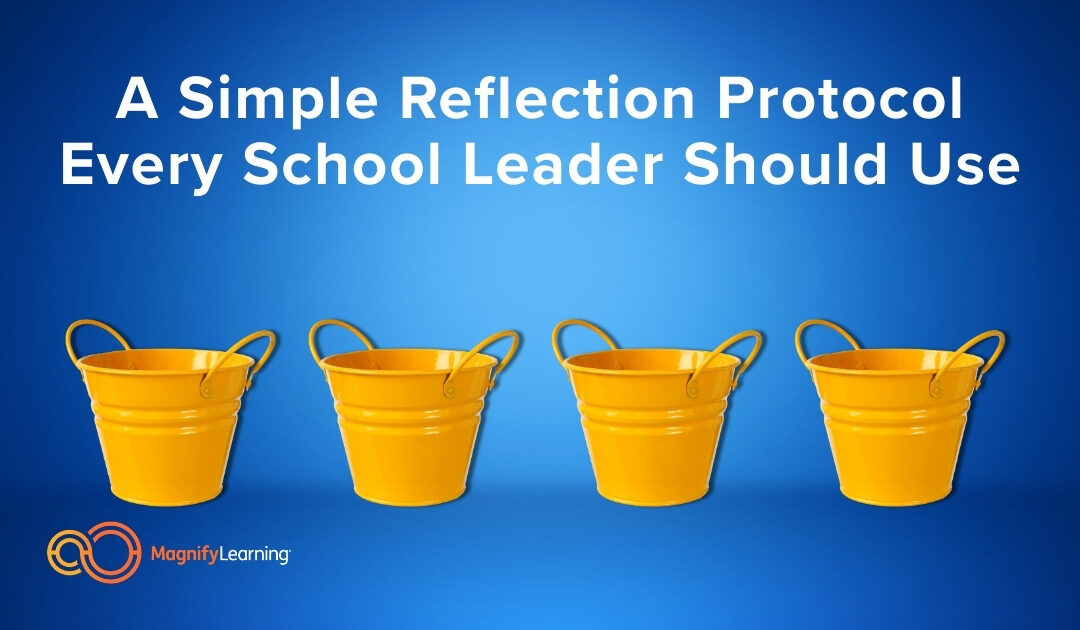
As the year comes to a close, great leaders don’t just move on—they pause, reflect, and intentionally prepare for what’s next. In this episode, Ryan Steuer shares a powerful four-bucket reflection protocol used at Magnify Learning to help leadership teams identify what’s working, what’s broken, what’s confusing, and what truly mattered most.
This simple but effective structure can be used at the end of a school year, quarter, or major initiative—and it creates clarity, trust, and momentum for the future.
The 4-Bucket Reflection Protocol
1. What Worked
Leaders begin by naming the practices, systems, and initiatives that genuinely moved the work forward.
Examples include:
- Improved meeting structures or rhythms
- Classroom walkthroughs that led to visible instructional shifts
- Communication strategies that strengthened alignment
- Initiatives with a clear beginning, middle, and end
This step reinforces progress, boosts morale, and helps teams identify what should continue.
2. What’s Broken
Next, teams openly name systems or processes that didn’t work as intended.
These might include:
- Meetings that lack purpose or impact
- Communication processes that vary across schools
- Initiatives that sounded good but fell flat in practice
This bucket invites honest feedback without judgment and signals that leadership is listening—and willing to improve systems, not blame people.
3. What’s Confusing
Confusion often hides beneath the surface, especially in complex systems. This bucket creates language for naming unclear expectations or mixed messages.
Common examples include:
- Conflicting directions about autonomy vs. compliance
- Overlapping initiatives with unclear priorities
- Communication that unintentionally sends mixed signals
Addressing confusion strengthens trust and prevents frustration from turning into disengagement.
4. Favorites
The final bucket captures what filled people’s cups—the moments that mattered most.
Favorites often include:
- Powerful PBL units and student exhibitions
- Community partnerships that exceeded expectations
- Student stories that reminded teams why the work matters
This bucket reveals what motivates the team and where leaders should invest more energy moving forward.
Why This Protocol Works
- Encourages honest, structured reflection
- Creates shared language for feedback
- Improves systems without defensiveness
- Strengthens culture and psychological safety
- Helps teams get 1% better through clarity
Ryan emphasizes that many issues—especially confusion—can be resolved immediately once surfaced. Over time, this protocol becomes part of the team’s culture, not just an annual exercise.
How to Use It
- End of the calendar year or school year
- Quarterly leadership reflection
- After a major initiative or rollout
- With district teams, principals, or coaches
Leaders can run it individually first, then with teams to maximize insight and impact.
Resource Mentioned
PBL Readiness Scorecard: Assess your school or district’s readiness for Project Based Learning and receive personalized next steps at pblscore.com
RESOURCES & LINKS RELATED TO THIS EPISODE
JOIN THE PBL MOVEMENT ONLINE COMMUNITY
SIGN UP FOR THE MAGNIFY LEARNING NEWSLETTER
SCHEDULE A PBL TRAINING WITH MAGNIFY LEARNING
CHECK OUT RESOURCES MENTIONED ON THE PODCAST
ASK RYAN A QUESTION FOR THE PODCAST
FOLLOW US ON SOCIAL MEDIA
Some of the links above are affiliate links which means we get a small commission on anything you purchase using that link (at no more cost to you). As Amazon Associates, we earn from qualifying purchases.
STAY TUNED FOR THE NEXT EPISODE OF THE PBL SIMPLIFIED PODCAST COMING SOON!